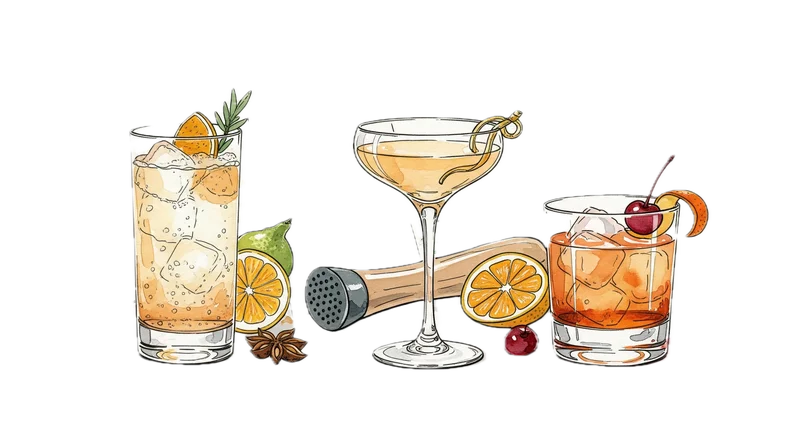
Recipes
A variety of timeless classics and modern innovations
Adonis
Low-ABV sherry cocktail with orange bitters
Glass: Nick & Nora
Garnish: Orange peel
Fino's saline, dry oxidative character is the drink's spine; sweet vermouth supplies the sugar and red-fruit lift that fino lacks. Orange bitters thread between them with citrus that both ingredients already carry in trace, producing one of the lightest, lowest-ABV stirred drinks in the canon.
Americano
Low-ABV aperitif with Campari
Glass: Highball
Garnish: Orange peel
The Negroni base diluted with soda instead of fortified with gin — bitterness and sweetness in equal measure, lengthened to a session-able strength. Orange bitters amplify the citrus already in the Campari peel; the result is the most efficient introduction to bitter aperitivo the cabinet allows.
Amsterdam Flip
Dutch genever flip with whole egg and nutmeg
Glass: Coupe
Garnish: Nutmeg
A flip is built on the egg providing both body and richness, and genever's malted-grain warmth flatters the egg's eggy-ness more than a London Dry would. Angostura's clove and cinnamon read as Christmas-spice in the foam, and the small amount of simple syrup binds the texture.
Angostura Glazed Portobello and Eggplant
Grilled portobello caps and eggplant rounds lacquered with a smoky-sweet Angostura bitters glaze
Glass: Grill
Garnish: None
House of Angostura has long championed aromatic bitters as a culinary ingredient. Portobello caps and eggplant rounds absorb the smoky-sweet glaze the way meat does, and the clove, cinnamon, and gentian notes from the bitters round out the sweetness of ketchup and brown sugar without reading as "bitter" on the palate — an unexpected but authoritative showcase of bitters in savory vegetable cookery.
Angostura Whipped Cream
Lightly sweetened whipped cream perfumed with aromatic bitters — a Trinidadian topping for hot chocolate, pies, and coffee
Glass: Mixing Bowl
Garnish: None
House of Angostura has promoted its bitters as a culinary ingredient in Trinidad for over a century, and a few dashes in fresh whipped cream is the classic entry point. The bitters add clove, cinnamon, and gentian notes that read as "spiced" rather than "bitter" at whipped-cream volumes, and the tint turns a pale pink-brown that looks deliberate on hot chocolate, pumpkin pie, or espresso. It is the cheapest, fastest demonstration of why aromatic bitters belong in a kitchen as well as a bar.
Angostura and Soda
Trinidad's house drink: a heavy dose of bitters lengthened with soda
Glass: Highball
Garnish: Lime wedge
Aperol Spritz
Venetian aperitif with Aperol
Glass: Wine Glass
Garnish: Orange slice
Aperol's lower bitterness and citrus-rhubarb sweetness needs less dilution than Campari, which is why Prosecco does most of the lengthening and soda only thins the mid-palate. The Prosecco's residual sugar matches Aperol's, so the bubbles carry the aroma without the drink turning sweet.
Aromatic Ginger Fizz
Non-alcoholic aromatic bitters with ginger beer and lime
Glass: Highball
Garnish: Lime wheel and candied ginger
Non-alcoholic aromatic bitters replicate the warming spice complexity of classic bitters-forward highballs. Ginger beer's natural bite pairs with the aromatic spice to create genuine depth without alcohol; lime supplies the acid that keeps the drink from turning syrupy.
Autumn Leaves
Rye whiskey with apple brandy and bitters
Glass: Coupe
Garnish: Apple slice
Apple brandy and rye share an oak-aged grain-and-fruit profile that maple syrup deepens rather than sweetens — maple is barrel-tinged itself. Lemon is the cut, and Angostura's clove threads through the apple and the maple in equal measure, making the drink read as one season rather than five ingredients.
Aviation
Gin cocktail with crème de violette and maraschino
Glass: Coupe
Garnish: Maraschino cherry
Maraschino's stone-fruit and crème de violette's floral-soap character pull in opposite directions, and gin's botanicals sit between them as the connector. Lemon is the acid spine; orange bitters lift the floral so the violette reads aromatic rather than perfumey. Half an ounce of violette is the maximum before the drink turns Parma.
Bamboo
Low-ABV sherry and vermouth cocktail
Glass: Coupe
Garnish: Lemon twist
Two dry, oxidative wines stacked — fino's almond and saline against the vermouth's herbal — produces a drink that reads almost mineral. Orange bitters supply the only sweet-aromatic note in the glass; without them, the drink would taste closed, monastic. With them, it opens into the lightest possible aperitif.
Bicicletta
Italian aperitivo of Campari and lager topped with soda — the beer cousin of the wine-based classic
Glass: Wine Glass
Garnish: Lemon wheel
Northern Italian cyclist's drink — Campari's bitter orange laid over a light lager extends the beer's hop bitterness into citrus. The soda lightens; the lemon wheel scents the rim. A beer-and-aperitif crossover that reads more like a long Campari Spritz than a cocktail.
Bitter Citrus Tonic
Non-alcoholic citrus bitters with tonic and grapefruit
Glass: Highball
Garnish: Grapefruit slice
A refreshing non-alcoholic highball that uses non-alcoholic orange bitters to bring complexity to tonic water and fresh grapefruit juice. Demonstrates how non-alcoholic bitters can create genuinely interesting mocktails rather than mere juice drinks.
Bitter End
Cocktail showcasing multiple bitters
Glass: Coupe
Garnish: Orange peel
A Trinidad-Sour structure with a smaller bitters base, doubled aromatically by orange bitters. Orgeat's almond fat is what makes the gentian palatable at this dosage, and lemon's acid keeps the spice readable. The orange bitters are the lift; without them the drink reads heavy.
Bitter Sunrise
Non-alcoholic orange bitters with orange juice and grenadine
Glass: Collins
Garnish: Orange slice
A non-alcoholic riff on the Tequila Sunrise structure, using non-alcoholic orange bitters to add depth and complexity to orange juice and grenadine. The bitters transform what would be a simple juice drink into something with genuine cocktail character.
Black Forest Old Fashioned
Whiskey old fashioned with kirsch, chocolate and cherry bitters
Glass: Old Fashioned
Garnish: Fresh cherry and orange peel
Kirsch is dry cherry distillate, cherry bitters are concentrated cherry aromatics — they reinforce rather than duplicate. Chocolate bitters echo the bourbon's vanilla-meets-cocoa barrel notes; the small amount of simple keeps the drink from going Black Forest cake-sweet while preserving the dessert hint.
Black Manhattan
Modern Manhattan variation with Averna amaro replacing vermouth
Glass: Coupe
Garnish: Brandied cherry
Averna's caramel and orange-peel bitterness replaces sweet vermouth's red-fruit, deepening the Manhattan into something darker and longer on the finish. Rye's spice has more to lean into here; Angostura's clove sits inside Averna's herbal register like an echo.
Bloody Mary
Savory vodka cocktail with tomato and celery bitters
Glass: Highball
Garnish: Celery stalk, lemon wedge, elaborate
Vodka is a flavour-neutral carrier; the drink is a savoury seasoning showcase. Tomato juice supplies body, lemon supplies acid, Worcestershire supplies umami. Celery bitters are the aromatic that pulls the green-vegetal notes (celery salt, sometimes a stick) into focus, making the drink read garden-fresh rather than just savoury.
Boulevardier
Whiskey-based Negroni variation with bitters complexity
Glass: Old Fashioned
Garnish: Orange peel
Swapping gin for bourbon turns the Negroni from herbaceous to vanilla-warm, and the orange bitters re-introduce the citrus lift that gin's botanicals were doing for free. Campari's bitterness has more sweetness to fight here, which is why the drink reads richer and slower than its gin parent.
Brandy Crusta
Brandy cocktail with sugar rim and bitters
Glass: Wine Glass
Garnish: Lemon peel ribbon
An ancestor of the modern sour, the Crusta uses orange liqueur where modern recipes would use simple syrup alone — the liqueur sweetens and aromatises in one move. Brandy and orange flatter each other naturally; Angostura lifts the citrus so the drink doesn't read flat. Tiny portions, big aromatics.
Campari Macerated Strawberries
Fresh strawberries macerated in Campari and sugar — an Italian summer dessert
Glass: Serving Bowl
Garnish: Mint leaf
A traditional Italian summer preparation that leans on Campari's bitter-orange profile to balance the sweetness of ripe strawberries. The maceration draws out the fruit's juices and bleeds Campari's vivid red through the bowl — an elegant, near-effortless dessert that showcases bitter liqueurs as a culinary ingredient.
Champagne Cocktail
Sparkling wine cocktail with sugar and bitters
Glass: Champagne Flute
Garnish: Lemon peel
The bitters-soaked sugar cube is the entire point — it sits at the bottom of the flute releasing aromatic spice and a steady stream of bubbles for the entire drink. Cognac fortifies; Champagne dilutes upward over time. Each sip changes as the cube dissolves.
Chocolate Manhattan
Manhattan with Fee Brothers Chocolate Bitters
Glass: Coupe
Garnish: Orange peel
Chocolate bitters trade Angostura's clove-and-gentian backbone for cacao and roasted notes that flatter rye's grain spice and sweet vermouth's vanilla. The Manhattan structure is unchanged; only the aromatic register shifts, pulling the drink toward dessert without adding sugar.
Corpse Reviver No. 2
Classic gin sour with absinthe rinse and orange bitters
Glass: Coupe
Garnish: Orange peel
Equal parts of gin, Cointreau, Lillet, and lemon means the drink is built on simultaneity rather than balance — every flavour arrives at once. The absinthe rinse and orange bitters supply aromatic top notes the citrus and floral can ride on; the result is brighter than the sum of its parts.
Cynar Risotto
Creamy Italian risotto finished with Cynar, where the artichoke-based amaro reinforces the vegetable stock
Glass: Pasta Bowl
Garnish: Parmigiano shavings
Cynar is built on artichoke leaves and 12 other botanicals, which makes it a natural extension of a vegetable-stock risotto rather than an intrusion on it. Italian home cooks have long used amari to deglaze pans for braises and risotti; the bitterness cuts the richness of butter and cheese while the herbal depth amplifies the stock. The finished dish carries no obvious "amaro" flavour — only a deeper, more savory version of a plain risotto bianco.
Cynar Spritz
Italian artichoke bitter aperitif spritz
Glass: Wine Glass
Garnish: Orange slice
A simple aperitivo showcase for Cynar, the Italian artichoke-based bitter liqueur. The spritz format tempers Cynar's earthy bitterness with effervescence, making it an approachable introduction to this distinctive ingredient.
Dutch Courage
Genever cocktail with Bols Oranjebitter
Glass: Old Fashioned
Garnish: Orange peel
Genever is malted-grain, juniper-scented and rounder than London Dry — it wants citrus more than it wants more juniper, which is why Bols Oranjebitter fits the bill. The simple syrup is a quarter-ounce, just enough to round the genever's malt without sweetening it.
Earl Grey MarTEAni
Gin martini with Earl Grey tea infusion
Glass: Coupe
Garnish: Lemon peel
Earl Grey-infused gin brings bergamot, which is itself a citrus oil, so lemon and orange bitters reinforce rather than introduce the citrus character. Dry vermouth keeps the drink savoury where the tea wants to read sweet, and the small dose of simple syrup lets the bergamot bloom without going perfumey.
Fernet Tiramisu
Classic Italian tiramisu with Fernet-Branca in the espresso soak — an amaro-forward twist on the Veneto original
Glass: Baking Dish
Garnish: Cocoa powder dust
Tiramisu emerged in the Veneto in the 1960s and traditionally calls for a splash of Marsala or rum in the soak. Fernet-Branca is the natural amaro substitute: its menthol, myrrh, and bitter-herbal profile reinforces the espresso and cocoa without adding sweetness, and the cocoa-chocolate end of Fernet's flavour wheel bridges the cream and the dusting. The result is a drier, more savoury tiramisu that finishes with the long bitter hum of an Italian after-dinner digestif.
Fernet and Coke
The Argentine national drink — a tall, icy mix of Fernet-Branca and Coca-Cola, known locally as fernandito
Glass: Highball
Garnish: None
Argentina's national mixed drink — Coca-Cola's caramel and vanilla are the same flavour notes Fernet's herbal-bitter base happens to undercut, so the cola sweetens and aromatises in one move. The result tastes neither like Fernet nor like Coke; the two cancel each other into something amaro-light and surprisingly drinkable.
Fernet and IPA
The "bartender's handshake" — an ounce of Fernet-Branca with an IPA back
Glass: Shot and Pint
Garnish: None
Hop bitterness from a West Coast IPA and amaro bitterness from Fernet are different bitter compounds — alpha acids vs. iridoid glycosides — and they don't compete on the same axis. The result is a layered bitterness that reads as complementary rather than additive, with the beer's carbonation carrying Fernet's menthol up.
Gin Gin Mule
Gin and ginger beer with fresh mint
Glass: Copper Mug
Garnish: Mint sprig, lime wheel
A Mojito and a Moscow Mule overlapped — gin and mint share the herbaceous register, ginger beer and lime supply the spice-acid axis. Two dashes of Angostura sharpen the herbal complexity so the drink reads layered rather than just refreshing; the simple syrup balances the lime's bite without sweetening the mint.
Hanky Panky
Gin and sweet vermouth cocktail with Fernet Branca
Glass: Coupe
Garnish: Orange peel
Two dashes of Fernet — almost a rinse — is enough to transform a sweet Martini into something with menthol-bitter depth. Gin and sweet vermouth carry the botanical spine; Fernet supplies the aromatic finish that lingers after the swallow. Bitterness as a structural accent, not a flavour.
Heidelberg Sour
German apple brandy sour with herbal bitters
Glass: Coupe
Garnish: Lemon wheel
Obstler is German fruit brandy — apple and pear, often unaged — and herbal bitters re-supply the dimension that aging would have. Egg white smooths the spirit's dry edge, lemon keeps it tart, and the bitters carry the drink from "fruit brandy sour" to something with structural depth.
Hot Toddy
Warming whiskey cocktail with honey and lemon
Glass: Irish Coffee Glass
Garnish: Lemon wheel, cinnamon stick
Heat volatilises aromatics — honey's floral notes, lemon oils, whiskey's vanilla, and Angostura's clove all rise to the nose at near-boiling temperature. The drink is medicinal in structure (acid, sugar, spirit, spice, water) and the bitters are what make it taste considered rather than thrown together.
Jungle Bird
Rum cocktail with Campari and pineapple
Glass: Old Fashioned
Garnish: Pineapple wedge
Dark rum's molasses depth meets Campari's bitter citrus over the back of fresh pineapple — the pineapple's enzymatic brightness keeps the Campari from reading aggressive, and the rum's funk matches the Campari's complexity sip for sip. Lime sharpens the fruit; the small simple syrup is a corrective, not a sweetener.
Jäger Mule
German herbal mule with ginger beer
Glass: Copper Mug
Garnish: Lime wheel
Jägermeister is already a 56-botanical herbal liqueur — the ginger beer's spice extends Jäger's anise and licorice rather than competing with them, and lime cuts the syrupy weight. Two dashes of Angostura tighten the aromatics into something that drinks faster than its sweetness would suggest.
Last Word
Equal-parts gin cocktail with Green Chartreuse and maraschino
Glass: Coupe
Garnish: None
Equal parts of three modifiers (Chartreuse's herbal complexity, maraschino's stone-fruit, lime's acid) and a base spirit means no ingredient can hide. Gin is the connector — its botanicals overlap with Chartreuse's herbs — and lime's acid keeps the two sweet liqueurs from collapsing into syrup.
Lavender Lemonade
Non-alcoholic lavender bitters with lemon and honey soda
Glass: Collins
Garnish: Lavender sprig
A floral non-alcoholic cooler that uses lavender bitters to lift simple lemonade into something genuinely complex. The honey syrup bridges the floral and citrus elements, creating a mocktail with real structural sophistication.
Lemon Lime and Bitters
Australia's pub refresher: lemonade, lime and a coat of Angostura
Glass: Highball
Garnish: Lime wheel
London Garden
Gin cocktail with British herbs
Glass: Coupe
Garnish: Fresh herbs
St-Germain's elderflower doubles down on gin's botanicals, and the orange bitters lift the citrus theme so the drink reads as a coherent garden rather than a stack of green flavours. Lime keeps the elderflower's sweetness in check; the simple syrup is a half-measure, just enough to round the edges.
Mai Tai
Classic tiki cocktail with aged Jamaican rum and orgeat
Glass: Rocks
Garnish: Mint sprig and lime shell
Aged Jamaican rum's funk and oak meet orgeat's almond fat across the bridge of fresh lime — the orgeat coats the palate so the rum's hogo reads complex rather than aggressive. Orange curaçao deepens the citrus; one dash of Angostura ties the spice in the rum to the aromatic top of the drink.
Manhattan
Classic whiskey and vermouth cocktail
Glass: Coupe
Garnish: Maraschino cherry
Sweet vermouth softens rye's pepper and dries spice without smothering it, and Angostura bridges the two by echoing the vermouth's botanicals while sharpening the whiskey's grain. Stir, don't shake: dilution is the fourth ingredient, and clarity matters because there is nothing in the glass to hide behind.
Martinez
Gin and vermouth cocktail with orange bitters
Glass: Coupe
Garnish: Orange peel
Old Tom is sweetened gin, which is why the vermouth-to-gin ratio leans heavier on vermouth than a Martini — the drink is built around sweetness rather than against it. Maraschino's stone-fruit note threads through both, and orange bitters keep the whole thing from reading flat by adding citrus lift.
Michelada
Mexican beer cocktail with lime, salt, hot sauce, and a dash of aromatic bitters
Glass: Pint Glass
Garnish: Lime wedge
Beer is the carrier; the seasoning is the drink. Lime and salt lift the lager's malt the way they lift food, and Worcestershire and hot sauce supply the umami-and-heat that turn refreshment into appetite. Angostura is the aromatic finish that keeps the drink from reading as just a salty, hot beer.
Montreal
Rye and Cynar cocktail with Peychaud's bitters
Glass: Coupe
Garnish: Orange peel
A stirred modern cocktail that showcases Cynar as a full modifier alongside rye whiskey and sweet vermouth, with Peychaud's bitters adding the New Orleans aromatic lift. Demonstrates the versatility of artichoke-forward bitter liqueurs in whiskey drinks.
Naked and Famous
Modern equal-parts cocktail with mezcal and Aperol
Glass: Coupe
Garnish: None
Equal-parts cousin of the Last Word — yellow Chartreuse where green sat, mezcal where gin was, Aperol replacing maraschino. Mezcal's smoke and Aperol's bittersweet citrus are unexpectedly compatible because both carry caramelised sugar in their cores; lime is the acid that holds them apart.
Navy Grog
Tiki cocktail with multiple rums and bitters
Glass: Tiki Mug
Garnish: Mint sprig
Three rums layered for depth (light, dark, demerara), citrus on two axes (lime sharpness, grapefruit bitterness), and honey mix — diluted honey — to bind it all without crystallising. Angostura ties the rum funk to the citrus by adding the same warm spice that the rums already carry from oak.
Negroni
Italian aperitif cocktail with Campari
Glass: Old Fashioned
Garnish: Orange peel
Three components in equal measure means none can dominate — Campari's bitterness, sweet vermouth's vanilla-spice, and gin's botanical spine reach the palate together. The drink is a balance demonstration: each ingredient supplies what the other two lack, and the orange peel pulls Campari's citrus to the front.
Oaxaca Old Fashioned
Mezcal and tequila old fashioned
Glass: Old Fashioned
Garnish: Orange peel
Reposado's barrel-aged caramel meets mezcal's smoke, with agave syrup as the same-family sweetener to keep the agave thread continuous. Mole bitters bring chocolate, chilli, and spice that flatter the mezcal's char; orange bitters lift the whole thing so the drink doesn't go single-note smoky.
Old Fashioned
Classic whiskey cocktail with Angostura bitters
Glass: Old Fashioned
Garnish: Orange peel and cherry
Angostura's clove and gentian backbone gives bourbon's vanilla-and-corn sweetness somewhere to land — the sugar dissolves the spirit's edge while the bitters supply the aromatic spine that keeps the drink from collapsing into syrupy whiskey. Stripped to three components, every choice has nowhere to hide; the bitters are the seasoning that makes the simplicity sing.
Orleans Fizz
Non-alcoholic Orleans bitters with cranberry, lime, and soda
Glass: Old Fashioned
Garnish: Lemon peel
Inspired by New Orleans Creole flavours, this non-alcoholic fizz uses Orleans-style bitters with their anise and cherry character to transform cranberry juice into something evocative of classic Sazerac territory without the alcohol.
Paper Plane
Modern equal-parts cocktail with amaro and bitters
Glass: Coupe
Garnish: None
Four ingredients in equal measure works because bourbon's sweetness, Aperol's bittersweet citrus, Amaro Nonino's gentian-and-honey, and lemon's acid each occupy a different quadrant of the palate — none crowds the others. The result tastes elegant rather than busy because every component is doing exactly one job.
Penicillin
Scotch cocktail with honey and ginger
Glass: Old Fashioned
Garnish: Candied ginger
The Islay float is the trick — peat smoke enters through the nose on every sip while the blended Scotch carries the structure underneath. Ginger and honey are an old folk-medicine pairing that lemon ties together with acid, and the smoke transforms a sour into something that feels medicinal in the best sense.
Pimm's Cup
Traditional British summer cocktail
Glass: Collins
Garnish: Cucumber and mint
Pimm's is gin-based and already lightly bittered with quinine and citrus peel; ginger beer doubles down on the spice and supplies the length. Two dashes of Angostura sharpen the existing botanicals rather than introducing a new flavour, and a small amount of lemon keeps the drink crisp on a hot day.
Pink Gin
Gin seasoned with Angostura bitters — the Royal Navy's cocktail
Glass: Coupe
Garnish: Lemon twist
Pink Lady
Gin sour with grenadine and egg white
Glass: Coupe
Garnish: None
Grenadine's pomegranate sweetness can read candy-shop without something to anchor it — egg white provides texture, lemon provides cut, and the orange bitters bring the citrus theme into focus so the drink reads cohesive rather than just pink.
Pisco Sour
Peruvian/Chilean sour with pisco
Glass: Coupe
Garnish: Angostura bitters dots
Pisco's grape-distillate aromatics are delicate, which is why the bitters are dashed on the foam rather than into the drink — you smell Angostura first, taste the silky sour second, and the spirit reveals itself underneath. Lime and simple syrup balance to a clean sweet-tart; egg white is the texture that holds it all in place.
Ramos Gin Fizz
New Orleans gin fizz with orange flower water
Glass: Collins
Garnish: None
Citric acid (lemon and lime) curdles cream on contact unless the egg white emulsifies them first — that is why the shake is famously long. Orange flower water is the aromatic that turns gin-and-cream into something perfumed; the soda water lifts the foam at the end without diluting the structure.
Rob Roy
Scotch Manhattan with aromatic bitters
Glass: Coupe
Garnish: Maraschino cherry
A Manhattan with Scotch — blended Scotch's grain and light malt sit inside sweet vermouth's botanical sweetness more comfortably than peated would. Angostura's clove threads through the malt and the vermouth alike, so the substitution reads coherent rather than novelty.
Rum Punch
Caribbean planter's punch built on the old one-two-three-four rhyme
Glass: Rocks
Garnish: Grated nutmeg and lime wheel
Sazerac
New Orleans cocktail with Peychaud's bitters
Glass: Old Fashioned
Garnish: Lemon peel
Peychaud's anise-and-cherry profile is the New Orleans counterpoint to Angostura's clove, and the absinthe rinse lifts those same anise notes into the nose before the first sip. Rye's spice carries the bitters where bourbon's sweetness would muffle them; sugar exists only to make the bitters legible.
Sbagliato
Negroni variation with Prosecco instead of gin
Glass: Wine Glass
Garnish: Orange slice
"Mistaken" Negroni — Prosecco where gin should be — gentler, lower in ABV, and prismatically aromatic because the bubbles carry every botanical at once. Equal parts means equal weight; the Prosecco's slight sweetness softens the Campari's edge without flattening it.
Singapore Sling
Heritage Raffles Hotel cocktail with cherry and pineapple
Glass: Collins
Garnish: Pineapple and cherry
Gin and pineapple is the spine; Cherry Heering, Bénédictine, and Cointreau each contribute a different kind of sweetness (cherry, herbal, citrus). Lime cuts, grenadine tints and slightly sweetens, Angostura ties the herbal and the fruit together. A drink built like a tiki but constructed like a colonial-era highball.
Sonnema Sour
Classic sour cocktail showcasing Frisian berenburg herbal liqueur
Glass: Tumbler
Garnish: Lemon slice
Sonnema Berenburg is a Frisian herbal jenever bitter — already complex with juniper, gentian, and bay — so the sour structure is deliberately spare. Egg white smooths the herbal edge; lemon and a small amount of simple syrup bracket the bitterness without competing with it. The drink is the spirit, framed.
Spring Awakening
Gin cocktail with fresh herbs and bitters
Glass: Coupe
Garnish: Fresh herbs
Floral on floral — gin botanicals amplified by St-Germain's elderflower — needs acid to stay structural, which is what lime supplies. Orange bitters bridge the green and the floral so the drink reads cohesive; simple syrup rounds the edges of the lime without sweetening the elderflower further.
Summer Solstice
Light rum cocktail with citrus bitters
Glass: Highball
Garnish: Citrus wheel
Aperol-and-soda is the base; gin and lime convert it from spritz to sour in one move. The gin botanicals echo Aperol's rhubarb and gentian without doubling them, and the soda lengthens the drink to porch-sipping strength. A bright, low-ABV summer cocktail with real aromatic structure.
Suze Spritz
French gentian aperitif spritz
Glass: Wine Glass
Garnish: Lemon peel
Suze's gentian root is bone-dry and floral-bitter, which is why the format leans on Prosecco's residual sugar more than an Aperol Spritz does — the wine sweetens what the liqueur won't. Orange bitters and the peel pull citrus through, taming the gentian without softening it.
Texel Warmer
Comforting hot chocolate spiked with Texels Juttertje herbal liqueur
Glass: Mug
Garnish: Whipped cream (optional)
A Frisian beach-bar warmer — the Juttertje liqueur is anise-and-spice-led, and hot chocolate milk is a fat-rich, sweet vehicle that turns the herbal heat into something that reads like a spiced dessert. Two ingredients, both already complete; the pairing is about temperature and texture more than balance.
The Improved Cocktail
Jerry Thomas-era classic template: spirit with maraschino, absinthe, and bitters
Glass: Old Fashioned
Garnish: Lemon peel
An "improved" Old Fashioned — maraschino and absinthe added to the basic spirit-sugar-bitters formula. Maraschino's stone-fruit sweetens differently from sugar (rounder, more aromatic), and the bar-spoon of absinthe lifts the spirit's nose with anise. The result is a drink with the structure of the original but more dimension.
Toronto
Rye whiskey cocktail with Fernet Branca as starring ingredient
Glass: Coupe
Garnish: Orange peel
A quarter ounce of Fernet is enough to dominate any drink without overwhelming it — its menthol and bitter herbs sit on top of rye's grain-spice as a cooling counterweight. The simple syrup is corrective, just enough to keep Fernet's edge in check; Angostura ties the rye and the Fernet together.
Trinidad Sour
Orgeat-based sour with Angostura bitters as base
Glass: Coupe
Garnish: Lemon peel
Inverting the role of bitters from accent to base spirit only works because orgeat's almond fat coats the palate against the gentian onslaught, and lemon cuts the medicinal edge. The 1/4 oz of rye is structural — just enough alcohol to carry the bitters' aromatics without letting the drink read as syrup.
Tropical Bitters Punch
Caribbean-style punch with aromatic bitters
Glass: Punch Cup
Garnish: Pineapple and cherry
Pineapple and orgeat both bring sweetness with body — pineapple's enzymatic brightness, orgeat's almond fat — and rum sits comfortably in the middle. Three dashes of Angostura push the drink past tropical-sweet into something with aromatic backbone, the spice anchoring the otherwise candy-leaning fruit.
Vieux Carré
New Orleans cocktail showcasing Peychaud's bitters
Glass: Old Fashioned
Garnish: Lemon peel
Two spirits, two bitters, one liqueur, one vermouth — every component does double duty. Cognac sweetens the rye, Bénédictine's herbal honey echoes the vermouth's botanicals, and the two bitters cover the aromatic spectrum (Angostura's clove, Peychaud's anise) so neither dominates.
Walnut Old Fashioned
Old Fashioned with Fee Brothers Walnut Bitters
Glass: Old Fashioned
Garnish: Walnut
Walnut bitters echo bourbon's barrel tannins and oak more directly than Angostura does, which is why the simple syrup carries less work here — the bitters are doing the rounding themselves. The result is an Old Fashioned that reads autumnal and a touch drier, with the nuttiness lingering on the finish.
Whiskey Sour
Classic sour cocktail elevated with aromatic bitters
Glass: Coupe
Garnish: Lemon wheel and cherry
Egg white turns sharp acid and warm bourbon into a single creamy texture, and Angostura is dashed on top as both garnish and aromatic gateway — you smell the bitters before you taste the sour, which sets the palate up to read the drink as balanced rather than tart.
White Negroni
Modern Negroni variation with Suze and Lillet Blanc
Glass: Old Fashioned
Garnish: Lemon peel
Gentian (Suze) replaces Campari's bitter orange; Lillet Blanc's floral-fruit replaces sweet vermouth's red-spice. The result is the same Negroni structure — botanical-bitter-sweet — translated into a paler, drier, more floral key. Gin remains the connector because its botanicals overlap with both modifiers.
Winter Warmer
Whiskey cocktail with warming spices
Glass: Old Fashioned
Garnish: Cinnamon stick
Cinnamon syrup and Angostura's clove are warm-spice cousins, and honey supplies the sweetness that bourbon's vanilla agrees with. Lemon sharpens what would otherwise be a heavy, sweet drink; the bitters keep the cinnamon from going gingerbread.
Zombie
Potent tiki cocktail with multiple rums and bitters
Glass: Tiki Mug
Garnish: Mint sprig, pineapple, cherry
Tiki-era density is the point — three rums (each at a different age), two sweeteners (grenadine, cinnamon, plus falernum's clove-and-almond) and two acids (lime, grapefruit). Absinthe drops and Angostura supply aromatic complexity that prevents the whole thing from reading as juice; the result is layered rather than busy.